Best Temples in South Korea
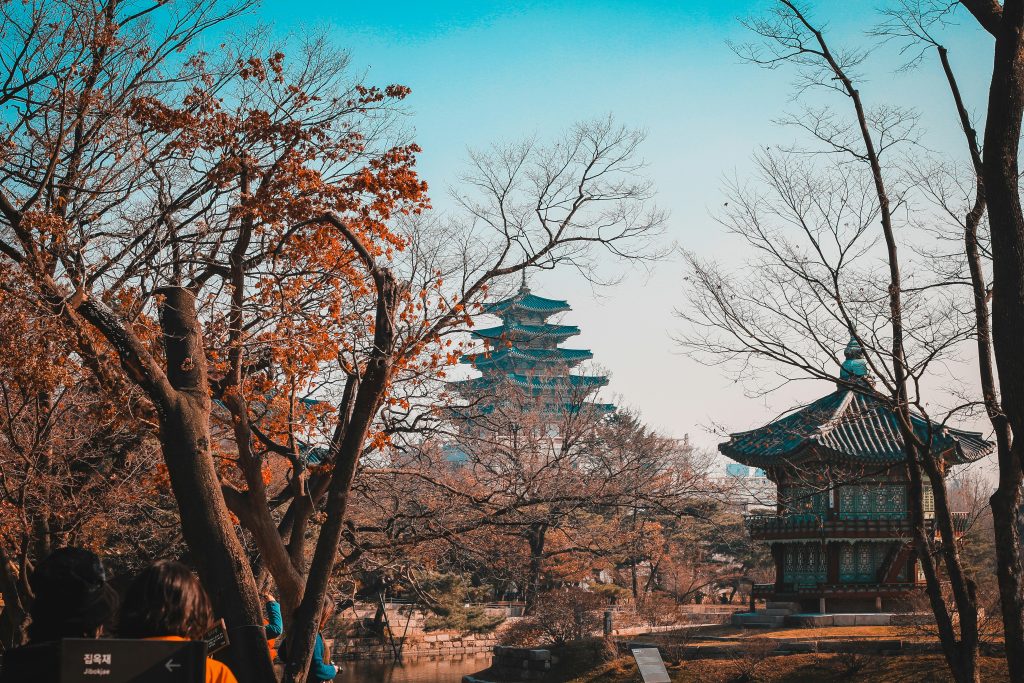
South Korea is not only about Seoul, neon lights, cosmetics, and street food, but also a country with a very strong temple culture. Here, you will find both famous Buddhist complexes that almost all travelers include in their itinerary, and quieter places people visit not just to “tick them off,” but for the atmosphere itself: wooden pavilions in the mountains, ancient stone pagodas, forest trails, the scent of pine trees, and a feeling of complete silence just a couple of hours away from a big city.
But there are many temples in Korea, and on a first trip it is easy to get confused: what is really worth seeing, where is more convenient to go from Seoul, where an hour is enough, where it is better to allow half a day, and which places make sense to combine into one route.
Which South Korean temples to choose for a first trip
Most famous temples in South Korea:
- Bulguksa (Gyeongju) — the temple many people start with when getting acquainted with Korean temple architecture; one of the main symbols of the country’s Buddhist heritage.
- Haeinsa (Hapcheon) — one of Korea’s most important temples, best known as the place where the Tripitaka Koreana is kept (the famous collection of Buddhist sacred texts).
- Jogyesa (Seoul) — the main temple of the Jogye Order in the capital, a convenient and straightforward option for those who want to see an important temple without making a long trip out of the city.
The most atmospheric:
- Beomeosa (Busan) — a large mountain temple with a very calm, “forest-like” atmosphere, especially good on weekdays and in the morning.
- Bomunsa (Seongmodo, Incheon) — cliffs, sea views, and a more secluded mood.
- Golgulsa (near Gyeongju) — an unusual temple with grottoes and a rock-carved Buddha; it feels completely different from the classic lowland temple complexes.
The oldest:
- Bongjeongsa (Andong) — one of the oldest temples in Korea, especially valued for its historical depth and old wooden architectural tradition.
- Beomeosa (Busan) — founded in 678, so it is not only beautiful but also truly ancient.
- Bongeunsa (Seoul) — a rare case of a temple with history dating back to 794 being woven into the rhythm of an ultra-modern megacity.
Best if you have little time:
- Bongeunsa (Seoul) — the easiest choice if you literally have half a day in the capital and do not want to spend time on complicated logistics.
- Jogyesa (Seoul) — another convenient city option that is easy to fit into a regular day of walking around the center.
- Bulguksa + Seokguram (Gyeongju) — the best “classic” temple day outside Seoul: two iconic places in one combination, without the feeling that the route is falling apart.
Best in the capital / near the capital:
- Bongeunsa (Seoul) — if you want the most convenient and visually striking temple in the city.
- Bongwonsa (Seoul) — a calmer alternative without as much tourist traffic as the most famous spots.
Best beyond the classic tourist route:
- Tapsa (Jinan, Jeollabuk-do) — an unusual temple with dozens of stone pagodas; it looks completely different from the usual “postcard-like” Korean complexes.
- Bomunsa (Seongmodo) — a good option for those who want to go beyond the standard Seoul–Gyeongju–Busan route and see a temple in a rarer island setting.
How many days do you need for temples on a first trip?
For a first trip, 2-4 days is usually enough if you combine Seoul with Gyeongju, Busan, or one strong trip deeper into the country. This allows you to see both city temples and more atmospheric mountain temples without overload.
The Best Temples in South Korea
Seoul and near the capital
- Jogyesa (Seoul)
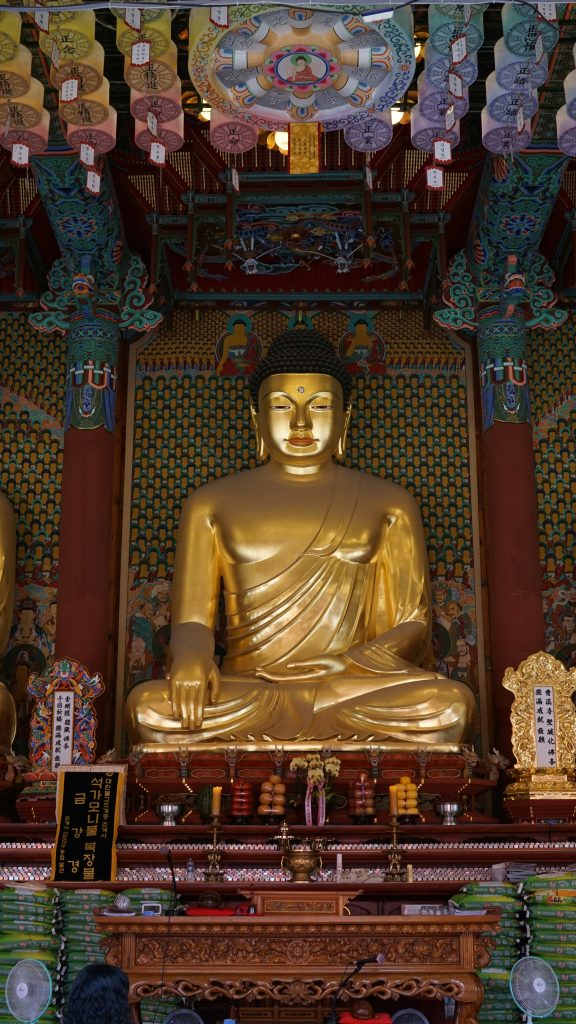
The main temple of the Jogye Order, the largest Buddhist tradition in South Korea.
Where it is: Jongno district, central Seoul.
How to visit: on your own; easy to combine with a walk around central Seoul.
How much time to allow: 30-60 minutes.
When it is best to go: in the morning or on a weekday; during the Lantern Festival it is especially lively here.
Tickets: free entry.
- Bongeunsa (Seoul)
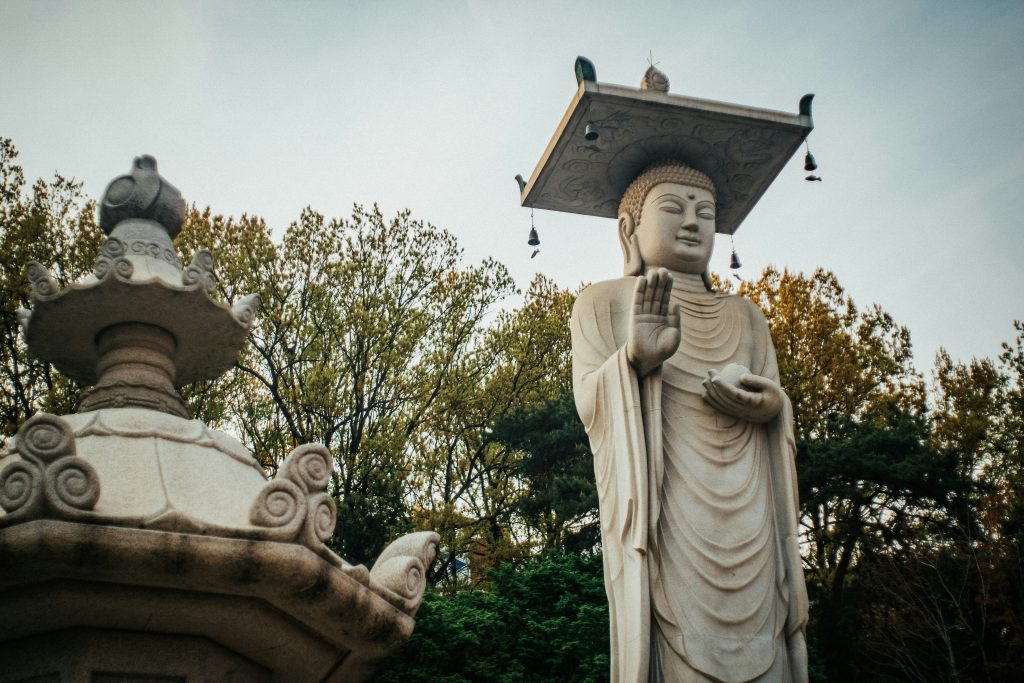
One of the most striking temples in the capital precisely because of the contrast: an ancient complex, founded in 794, stands next to the modern towers of Gangnam and COEX. It is a good choice for a first trip if you want to see “traditional” Korea without long journeys out of the city.
Where it is: Gangnam district, Seoul.
How to visit: on your own; a very convenient city temple without complicated logistics.
How much time to allow: 40-60 minutes.
When it is best to go: in the morning, while there are fewer tourists.
Tickets: free entry.
- Bomunsa (Seongmodo, Incheon)
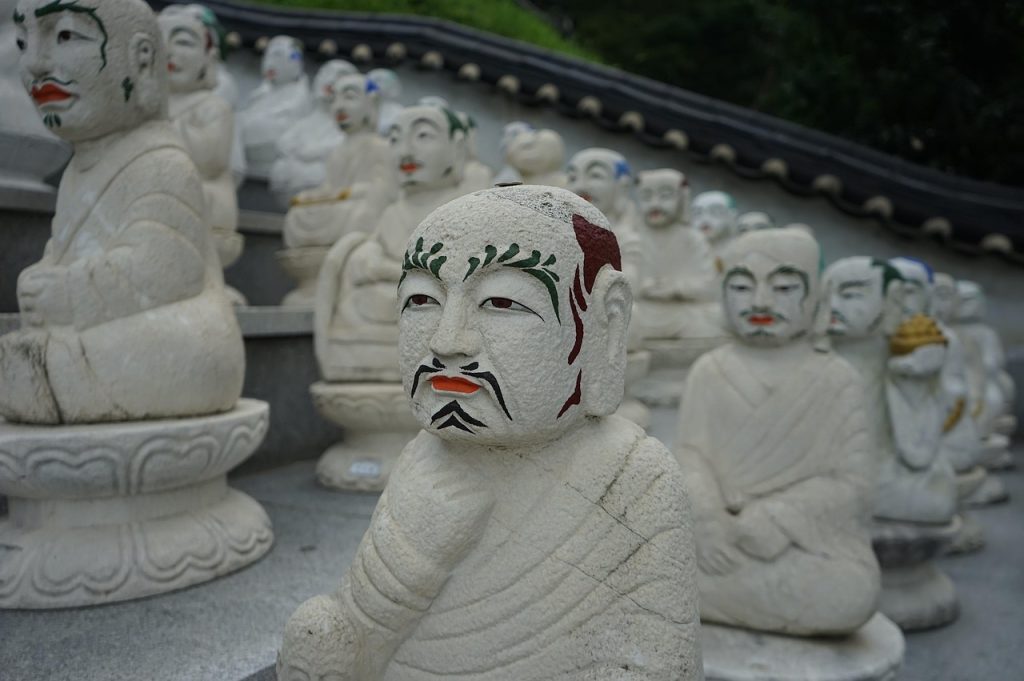
This is not just a temple “near the capital.” It stands on an island, faces the sea, and here you feel not urban Buddhism so much as calmness, cliffs, and the air of the coast. According to tradition, the temple was founded as early as the 7th century.
Where it is: Seongmodo Island, Ganghwa-gun, Incheon.
How to visit: best as a half-day or full-day trip from Seoul; most convenient by car or as part of an organized trip.
How much time to allow: 1-2 hours.
When it is best to go: in the morning and in clear weather.
Tickets: paid entry; it is better to check the current price for your visit date.
Gyeongju and the historic southeast
- Bulguksa (Gyeongju)
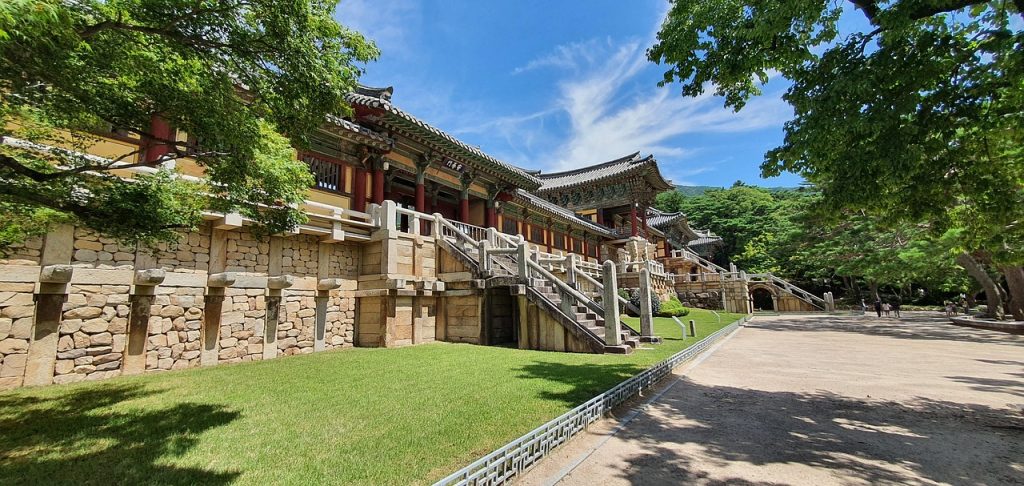
One of the main temples of South Korea and probably the most recognizable temple classic in the country. Bulguksa is connected with the heritage of the Silla kingdom, was rebuilt in 751, and today is considered one of the most important monuments of Korean Buddhist architecture.
Where it is: Gyeongju, Gyeongsangbuk-do.
How to visit: on your own from Gyeongju; especially convenient to combine with Seokguram.
How much time to allow: 1-2 hours.
When it is best to go: in the morning, while there are fewer tourists.
Tickets: free entry.
- Seokguram Grotto (Gyeongju)
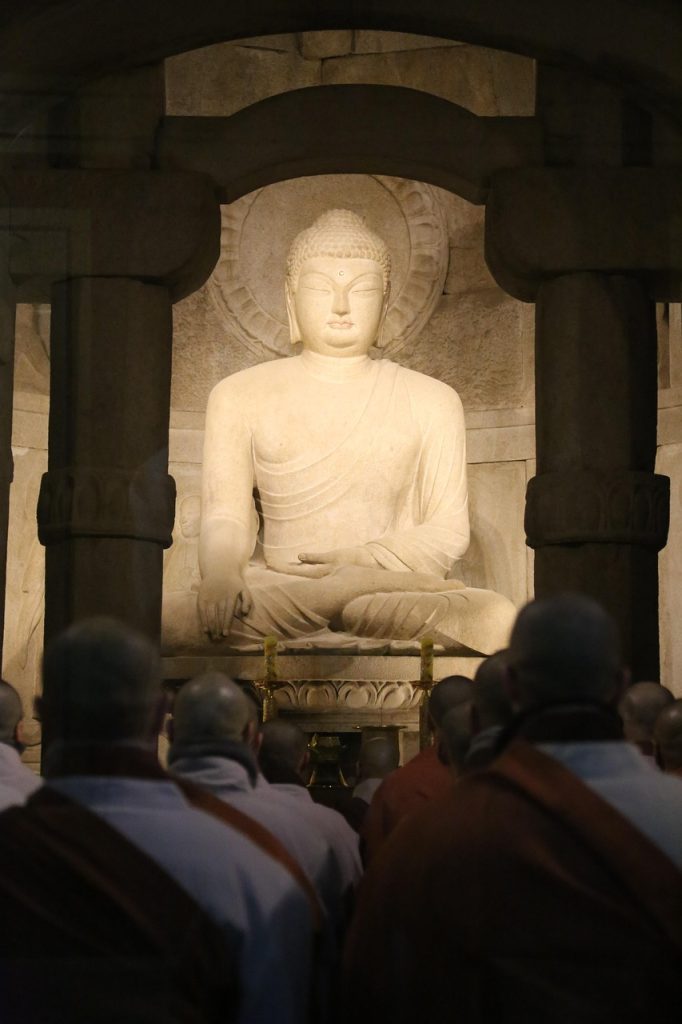
This is not a classic temple courtyard, but a rock grotto with a seated Buddha, one of the most valuable Buddhist monuments in Korea. People usually appreciate it not for its scale, but for its sense of concentration and the cultural weight of the place; the grotto was designed so that the Buddha statue faces the East Sea.
Where it is: near Bulguksa, Gyeongju.
How to visit: best in combination with Bulguksa; there are about 3 km between them by trail or 9 km by car.
How much time to allow: 30-60 minutes.
When it is best to go: in the first half of the day.
Tickets: free entry.
- Bongjeongsa (Andong)
A good choice for those who are interested not only in “postcard” beauty, but also in historical depth. The temple is associated with the 7th century, and its Geungnakjeon Hall is considered one of the most important examples of old wooden architecture in Korea. Unlike the most promoted places, Bongjeongsa feels quieter and more contemplative.
Where it is: near Andong, Gyeongsangbuk-do.
How to visit: best as a separate trip from Andong.
How much time to allow: 1-1.5 hours.
When it is best to go: in the morning or during the day on a weekday.
Tickets: paid entry; it is better to check the price before the trip.
Busan and the southeast
- Beomeosa (Busan)
One of the best temples in the country for those who want a truly classic mountain atmosphere. The temple was founded in 678, is located on the slopes of Geumjeongsan, and is known for its long monastic tradition, cultural relics, and templestay programs.
Where it is: Geumjeongsan, Busan.
How to visit: on your own from Busan; convenient to get there by metro and taxi.
How much time to allow: 1-2 hours.
When it is best to go: in the morning on a weekday.
Tickets: free entry.
- Haedong Yonggungsa (Busan)
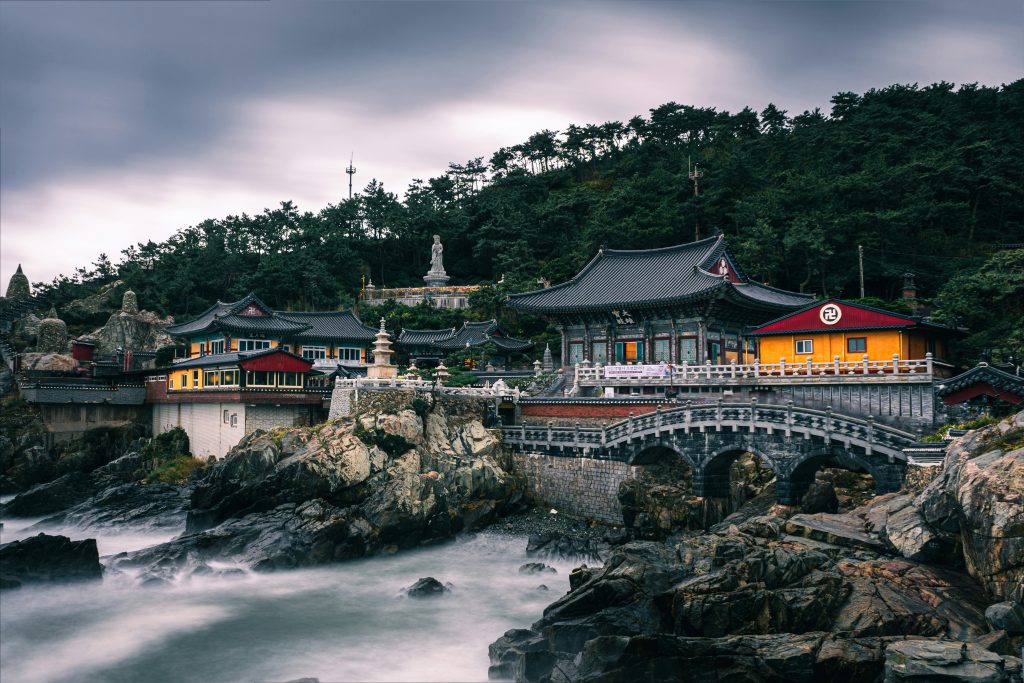
One of the most photogenic temples in the country and a rare case where a Korean temple stands right by the sea rather than in the mountains. Founded in 1376, it gives a completely different impression from Beomeosa: there is less “forest silence” here and more open views, cliffs, and sea wind.
Where it is: Gijang-gun, Busan.
How to visit: on your own from Busan; easy to include in a route along the city’s eastern coast.
How much time to allow: 45-90 minutes.
When it is best to go: as early in the morning as possible.
Tickets: free entry.
- Tongdosa (Yangsan)
One of the country’s “Three Jewel Temples.” It is especially important because genuine relics of the Buddha are kept here, and the complex itself is known not only for its age, but also for its large number of religious and artistic treasures.
Where it is: Yangsan, between Busan and Ulsan.
How to visit: most convenient as a separate trip from Busan or on the way between cities in the southeast.
How much time to allow: about 3 hours.
When it is best to go: in the morning or in the first half of the day.
Tickets: free entry.
Southern and mountain regions
- Haeinsa (Hapcheon)
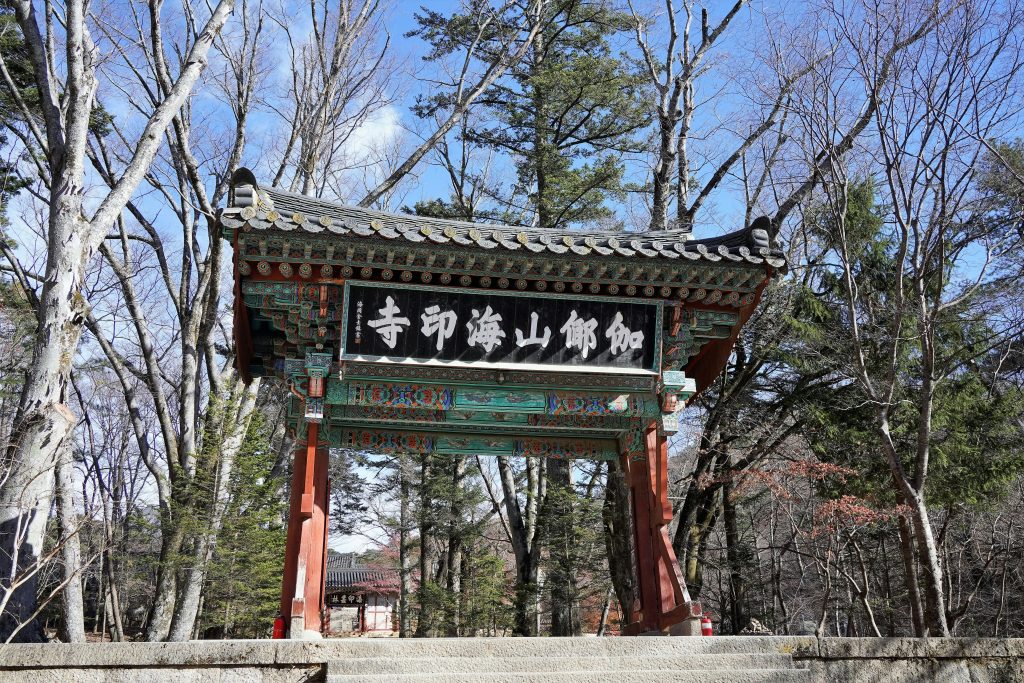
One of the largest and most respected temples in Korea. This is where the Tripitaka Koreana is kept — the complete collection of Buddhist texts on wooden blocks — as well as the famous Janggyeong Panjeon depositories, which are included on the UNESCO list. This is a temple not so much for a quick look as for a thoughtful visit.
Where it is: Hapcheon-gun, Gyeongsangnam-do.
How to visit: best as a separate half-day or full-day trip.
How much time to allow: 2-3 hours.
When it is best to go: in the morning; in summer and winter the visiting schedule may differ.
Tickets: paid entry.
- Songgwangsa (Suncheon)
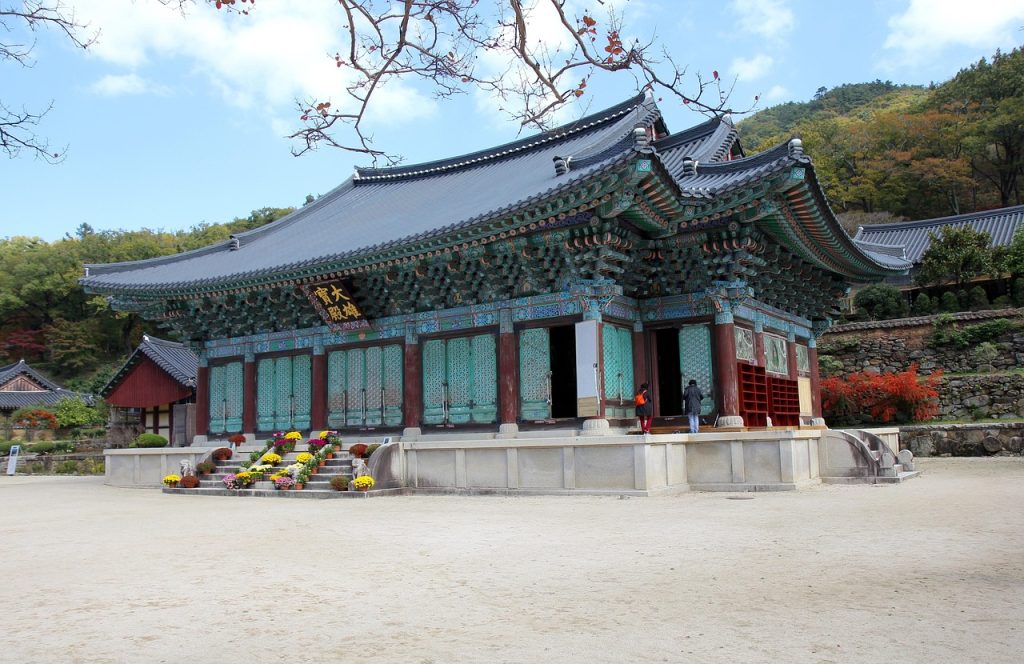
One of Korea’s “Three Jewel Temples” and a very strong place precisely because of the scale of the complex. There are more than 80 buildings here, several national treasures, a museum, a Buddhist university, and templestay programs — so this is not only a temple for tourists, but a major living center of Buddhist life.
Where it is: western side of Mount Jogyesan, Suncheon-si, Jeollanam-do.
How to visit: best included in a route around Suncheon and the Jogyesan area.
How much time to allow: 1.5-2.5 hours.
When it is best to go: in the first half of the day.
Tickets: free entry.
Temple itineraries
Option A: 3-4 days
Route 1: Seoul + the capital’s temples
- Regions: Seoul.
- What to see: Jogyesa + Bongeunsa, with the option to add Bongwonsa or make a short trip to Bomunsa.
- Route logic: if you do not have much time, it is better not to try to go too far. Seoul gives you several different options at once: a central city temple, a more visually striking temple in a modern district, and, if you want, a calmer option away from the main tourist flow.
- How many transfers: no interregional transfers.
- Where to base yourself: the whole route is easy to do with one base in Seoul. Bongeunsa and Jogyesa are easy to visit independently, while Bomunsa is more of a half-day or full-day trip.
Route 2: Gyeongju for 1–2 days
- Regions: Gyeongju.
- What to see: Bulguksa + Seokguram, with the option to add Golgulsa or Gyeongju’s historic city sights.
- Route logic: this is the best short route outside Seoul. Bulguksa and Seokguram make sense to combine in one day: they are close to each other and are perceived as a pair, while Gyeongju itself works very well as a compact base for a first trip focused on historic Korea.
- How many transfers: 1 interregional transfer to Gyeongju and 1 back, if you are traveling from Seoul or Busan.
- Where to base yourself: it is best to stay in Gyeongju for at least 1 night rather than trying to go there and back in one day.
Route 3: Busan for 2 days
- Regions: Busan and surroundings.
- What to see: Beomeosa + Haedong Yonggungsa.
- Route logic: this option is good if you want to see two very different temples in one region: a classic mountain temple and a seaside one.
- How many transfers: no complicated transfers within the region.
- Where to base yourself: it is most convenient to stay in Busan for 2 nights and go out from there.
Option B: 7-10 days
Classic first-trip route
- Regions: Seoul → Gyeongju → Busan → Hapcheon or Suncheon / the south.
- Route logic: the route moves from the simplest to the deeper experience. First comes the capital, where temples are easy to fit into a regular city itinerary. Then Gyeongju as the main historical classic. After that comes Busan, to add a different kind of experience, including a seaside temple and a mountain temple. In the final part, you can choose one “more serious” trip: either Haeinsa for the Tripitaka Koreana, or the southern region with Songgwangsa and Seonamsa for a calmer, greener, and less touristy side of Korea.
- Approximate order:
Seoul (2–3 nights) → Gyeongju (1–2 nights) → Busan (2–3 nights) → Hapcheon or Suncheon (1–2 nights, if you want to deepen the route) → return to Seoul or fly out from the southern part of the country.This sequence is convenient because it does not force you to go back and forth, and it gradually takes you from the simplest city temples to more secluded and “substantial” places. - How many transfers: usually 3-4 major transfers during the whole trip. This is already quite full, but still not too tiring, as long as you do not change your base every day.
- Where it is best to base yourself:
- Seoul — a base for Jogyesa, Bongeunsa, and, if you want, Bomunsa.
- Gyeongju — a base for Bulguksa and Seokguram.
- Busan — a base for Beomeosa, Haedong Yonggungsa, and a trip to Tongdosa.
- Hapcheon or Suncheon — a good continuation of the route for those who want to see not only the most famous temples, but also more atmospheric regions.
Temple etiquette and visiting rules in South Korea
Dress code
It is better to choose calm, not too revealing clothing: with covered shoulders, without extremely short shorts, mini-skirts, or overly revealing tops. If your trip falls in spring or autumn, or includes visits to mountain regions, it is worth bringing a light extra layer, because many temples are located in the mountains, where it can be cooler and windier. Footwear is also best kept comfortable and stable — sneakers or good walking shoes work well.
How to behave inside
The main rule when visiting a temple is to speak quietly and not disturb prayer. Even if no major service is taking place at the moment of your visit, it still remains a space for religious practice, so it is important to behave calmly and respectfully. If you enter a hall, move without rushing, avoid loud conversations, laughter, and phone calls. It is also best not to block passageways, step into areas where people are praying, or try to get too close just for a photo. In some halls, visitors are asked to remain in socks, especially if shoes must be removed before entering.
Photo and video
Outdoors and around the temple grounds, photography is usually allowed, especially in courtyards, near pagodas, gates, and scenic views around the complex. Inside the halls, it is better to be more careful: if there are signs prohibiting photography, they should absolutely be respected, and if a prayer or ceremony is taking place, it is better not to raise your camera at all unless necessary. Even where photography is formally allowed, it is best to avoid flash, loud video recording, and intrusive photos of people who are praying.
If you are visiting with children
If you are going to a temple with a child, it is worth explaining in advance that this is a quiet place where people do not run or shout. It is best to bring water, comfortable shoes, and a light extra layer of clothing in case of climbs, stairs, and changing weather, because many temples are located on slopes or require at least a short walk — especially mountain temples. If your child gets tired quickly, it is more sensible to choose city temples or easier-to-reach ones, such as Bongeunsa or Jogyesa.
What else is important to remember
On temple grounds, it is best not to smoke, eat noisily, play music without headphones, or turn the place into a casual tourist-style photoshoot. If you see monks or ceremony participants, it is better to keep a respectful distance and not interfere with what is happening. And if you are unsure whether you may enter somewhere, sit down, or take photos, the safest rule is simple: watch how local visitors behave, or ask on site.
Practical tips for visiting temples in South Korea
How to avoid crowds
The best rule for visiting most popular temples is to arrive in the morning, especially if you are going to Haedong Yonggungsa, Bongeunsa, Bulguksa, and other well-known places. At that time, there are usually fewer tour groups, the light is softer, and the overall atmosphere is calmer and more pleasant for walking. If you can choose the day, it is almost always better to go on a weekday rather than at the weekend: for temples that remain living religious spaces, this noticeably affects both the level of quiet and the chance to explore the grounds peacefully.
Weather and footwear
After rain, the stone paths and steps on temple grounds can be slippery, and in hot weather the walk to the temple often feels harder than it looks on the map. So it is better to choose comfortable closed shoes with a proper sole from the start, rather than flip-flops or thin sandals. In summer, it is worth bringing water, a hat, and a light extra layer, because even in green mountain areas it can be hot and humid. In spring and autumn, on the contrary, it is useful to have something to wear on top: in the mountains it is often noticeably cooler than in the city.
Accessibility: stairs, climbs, and long walks
If simple and comfortable access matters to you, it is better to choose Jogyesa and Bongeunsa in Seoul — they are among the most convenient options, without a long approach and without the feeling that visiting a temple turns into a small hike. If you are traveling with children, elderly relatives, or simply do not want extra climbs, it is worth paying attention in advance to the temple’s location: whether it is in the city center, on the coast, or on a mountain slope.
Opening hours and seasonality
For some temples and related sites, opening hours can change depending on the season. For example, tourist materials often list different visiting hours for the Seokguram and Bulguksa area depending on the month, so before your trip it is better to quickly check the current information on the official page. This is especially important in winter: it gets dark earlier, and the idea of leaving “one more temple for the evening” may turn out badly simply because you arrive too late. In winter, some temple sites in Korea operate on shorter schedules, as Visit Korea notes.
Typical tourist inconveniences near popular site
Near popular temples, it is best to follow simple rules: check the price in advance and do not buy a souvenir “from hand” without a clear price. If you do not want to take risks with transport, it is more convenient to use official apps or follow a route you understand in advance.
Even on a first trip to South Korea, you can put together a very clear and beautiful temple route: choose one or two temples in Seoul, add Gyeongju with its main historic temple classics, and, if you have time, include Busan, where the experience already feels quite different — with mountains or the sea. That way, the route does not feel overloaded, but still ends up genuinely varied.
The most important thing is not to try to see everything at once. In Korea, temples are interesting not only because of their age, architecture, or UNESCO status, but also because of how differently they feel: one gives you an urban contrast, another historical depth, a third offers silence in the mountains, and a fourth opens up to sea views. So it is better not to “collect as many points as possible,” but to choose a few places that fit well into your route and the pace of your trip.